
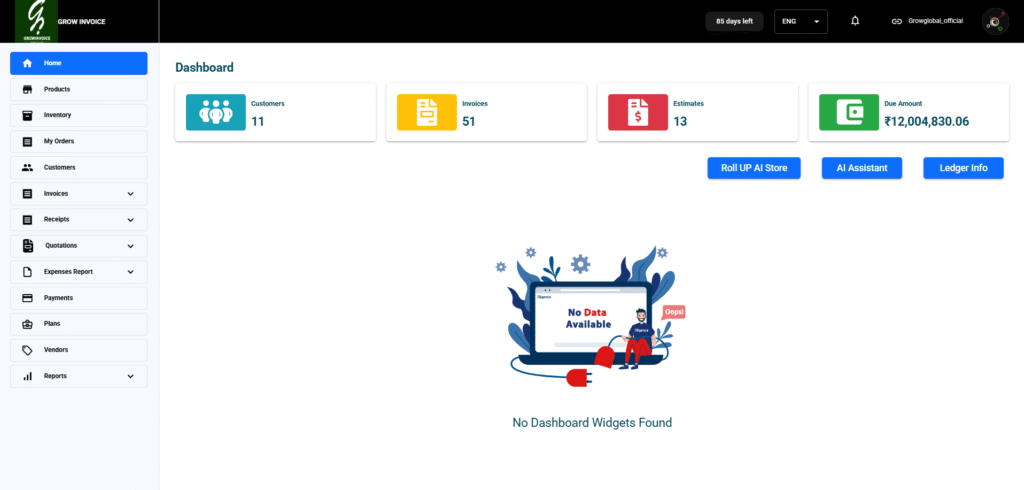
For decades, MSMEs have built businesses on paper. Registers, notebooks, printed invoices, and manual records have been the foundation of daily operations. This approach worked when businesses were small, local, and slow-moving. But today, markets move faster, customers expect professionalism, and margins are thinner than ever. Paper can no longer keep up with the pace of modern business.
The shift from paper to platform is no longer a luxury. It is a necessity for survival and growth.
The hidden cost of staying manual
Most MSMEs believe manual systems are cheaper because they avoid software costs. In reality, paper-based operations quietly drain money every day. Errors in billing, missed follow-ups, untracked stock, delayed payments, and poor financial visibility all add up over time. These losses are rarely visible in one place, which makes them easy to ignore but hard to recover.
Manual processes also depend heavily on memory and people. When key staff are absent or leave, knowledge leaves with them. The business becomes fragile instead of resilient.
Digital transformation is not about complexity
A common fear among MSMEs is that digital tools are complicated, expensive, and meant only for large enterprises. This belief has slowed adoption for years. True digital transformation for MSMEs is not about advanced systems or heavy automation. It is about replacing confusion with clarity.
A good digital platform simplifies work instead of adding layers. It brings all essential business information into one place, making everyday decisions easier and faster.
Visibility is the first breakthrough
The biggest change MSMEs experience after going digital is visibility. When data lives on paper, information is scattered. When data lives on a platform, it comes together.
Business owners can finally see:
-
What is selling
-
What is stuck in inventory
-
Who has paid and who has not
-
Where money is going
This visibility creates confidence. Decisions are no longer based on assumptions but on real numbers.
Systems reduce dependency on people
Paper-based businesses often depend on individuals to remember processes and manage details. Digital platforms turn these processes into systems. Invoicing, inventory updates, payments, and reports follow consistent rules instead of personal habits.
This reduces human error and makes the business easier to manage, even as it grows. Owners can step back from daily firefighting and focus on strategy and growth.
Professionalism builds trust
Digital platforms change how customers perceive MSMEs. Clean invoices, accurate records, timely updates, and transparent transactions signal professionalism. Customers trust businesses that operate smoothly and communicate clearly.
This trust directly impacts repeat business, referrals, and long-term relationships. Digital adoption becomes a growth driver, not just an operational improvement.
Growth demands structure, not effort
Many MSMEs try to grow by working harder. Longer hours, more follow-ups, more manual tracking. This approach has limits. Growth demands structure.
A digital platform provides that structure by connecting inventory, invoicing, payments, and reporting into one system. As volumes increase, the system absorbs complexity without increasing stress.
Control leads to better cash flow
Cash flow issues are one of the biggest reasons MSMEs struggle. Digital platforms help by giving clear insight into receivables, payables, and stock value. When business owners know exactly where money is blocked, they can take corrective action early.
Better control over cash flow reduces dependency on loans and improves financial stability.
The journey is gradual, not instant
Digital transformation is not a one-day switch. MSMEs do not need to digitize everything at once. Most successful journeys begin with one function, such as invoicing or inventory, and expand gradually.
Each small digital step reduces chaos and builds confidence. Over time, the platform becomes the backbone of the business.
From survival to scalability
Paper systems help businesses survive. Platforms help businesses scale.
A digital foundation allows MSMEs to handle higher volumes, serve more customers, and operate across locations without losing control. It creates a business that is not dependent on constant supervision but runs on systems.
Final thoughts
The journey from paper to platform is not about technology. It is about mindset. It is about choosing clarity over confusion, systems over stress, and growth over survival.
For MSMEs, going digital is no longer a future decision.
It is the present path to sustainable growth.