
By 2026, the MSME landscape will look very different from what it is today. Markets are faster, customers are more informed, and competition is no longer limited to the shop next door. Businesses are competing with digital-first players who operate with speed, clarity, and control. In this environment, hard work alone is not enough. MSMEs need the right digital tools to stay relevant and profitable.
Digital tools are no longer about modernization. They are about survival, efficiency, and sustainable growth.
Why MSMEs can no longer afford to stay offline
Most MSMEs still rely heavily on manual processes because they feel familiar and safe. But familiarity often hides inefficiency. Manual tracking creates blind spots. Blind spots lead to delayed decisions, revenue leakage, and stress.
Digital tools eliminate these blind spots by creating a single source of truth for the business. When data is available in real time, business owners stop reacting to problems and start preventing them.
Business management platforms that bring everything together
In 2026, MSMEs cannot afford to run their business on disconnected tools. One app for invoices, another for inventory, and a third for payments only create confusion. What MSMEs need is an integrated business management platform.
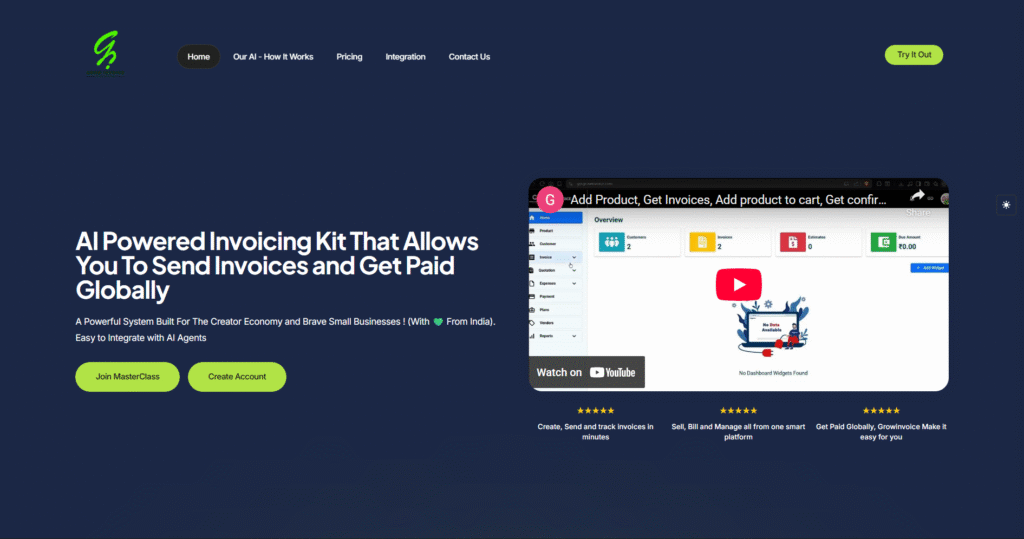
Such platforms bring products, inventory, invoices, payments, customers, and reports into one system. This integration reduces errors, saves time, and provides a clear picture of business health. Owners gain control without micromanaging every activity.
Smart invoicing tools that improve cash flow
Invoices are not just documents. They are the foundation of cash flow. In 2026, MSMEs need invoicing tools that do more than generate bills.
Digital invoicing tools help MSMEs:
-
Create professional invoices instantly
-
Track unpaid and overdue invoices
-
Reduce disputes with clear records
-
Get paid faster through integrated payment options
When invoicing is connected to payments and reporting, cash flow becomes predictable instead of stressful.
Inventory tools that protect revenue and working capital
Inventory mismanagement is one of the biggest silent losses for MSMEs. Too much stock blocks cash. Too little stock blocks sales. Digital inventory tools solve this by providing real-time visibility into stock levels.
Modern inventory systems automatically update with sales and purchases. They highlight low stock before it becomes a problem and show which products are not moving. This allows MSMEs to plan better, reduce wastage, and improve profitability without increasing sales.
Payment and receivables tracking for financial clarity
In 2026, MSMEs cannot rely on memory or manual follow-ups to track payments. Payment tracking tools give business owners complete visibility into who has paid, who has not, and how much money is expected.
This clarity improves financial discipline. Businesses can plan expenses better, avoid cash crunches, and reduce dependency on short-term borrowing.
Reporting tools that turn data into decisions
Most MSMEs generate data every day but rarely use it. Digital reporting tools convert raw data into simple insights.
With the right reports, MSMEs can understand:
-
Which products are profitable
-
Which customers generate repeat business
-
Where expenses are increasing
-
How cash flow is trending
Good reporting does not require financial expertise. It requires tools that present information in a clear and actionable way.
Document management for compliance and peace of mind
Compliance is becoming stricter every year. Tax filings, audits, and regulatory checks demand accurate and accessible records. Digital document management tools help MSMEs store, organize, and retrieve documents securely.
Instead of searching through files and folders, business owners can access invoices, receipts, and reports instantly. This reduces stress and improves readiness for audits and financial reviews.
Support and advisory tools for smarter decisions
Digital tools are no longer just about automation. In 2026, MSMEs need platforms that also provide guidance. Integrated support, expert access, and contextual help reduce dependency on external consultants for routine decisions.
This empowers MSMEs to make informed choices quickly and confidently.
Digital tools as a growth multiplier
The real power of digital tools is not in saving time. It is in freeing mental space. When systems handle routine tasks, business owners can focus on growth, innovation, and customer relationships.
Digital tools turn businesses from owner-dependent operations into scalable systems.
Final thoughts
In 2026, the question for MSMEs will not be whether to use digital tools, but which ones to use. The right tools simplify operations, protect cash flow, improve decision-making, and build trust with customers.
MSMEs that invest in the right digital foundation today will be the ones that grow tomorrow.
Digital tools are no longer optional.
They are the new backbone of successful MSMEs.
Final thoughts
In 2026, the question for MSMEs will not be whether to use digital tools, but which ones to use. The right tools simplify operations, protect cash flow, improve decision-making, and build trust with customers.
MSMEs that invest in the right digital foundation today will be the ones that grow tomorrow.
Digital tools are no longer optional.
They are the new backbone of successful MSMEs.